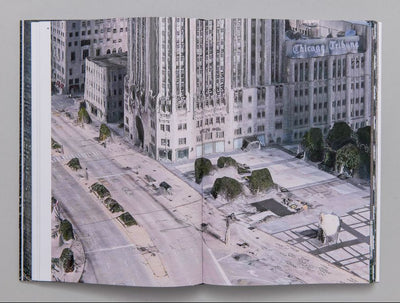
Algorithmic Scarves
«It is about [operations] all the way down: images that exist only because of other operations—and the operations that help us to understand the transformation of images into data, from visual to other forms and formats of registering the world beyond representation.»
Jussi Parikka,
«Operational Images: From the visual to the invisual»
CCBY.CLUB connects fashion, design, and technology critique. Algorithmically generated maps derived from 3D renderings and scans form the foundation of a small edition of contemporary foulards. What was never meant for human eyes steps out of the black box—printed on the finest silk, brought into contact with the human body. Inspired by the concept of «operative images» (Harun Farocki), CCBY.CLUB asks how algorithms see the world, interpret data, and derive decisions and value judgements from it. The first drop places the fragility of hand-finished silk against the precision of machine-computed digital aesthetics, inviting reflection on questions of authorship, privacy, and the role of data at the intersection of automation, craft, and cultural meaning. What usually remains hidden and is existing solely for technical purposes becomes tangible on silk, and takes on a life of its own as an autonomous object.
Operational Images
Maps derived from 3D scans are operative images—visual data produced by machines for machines, not made for human eyes. Extracted from rendering software and transferred onto silk, they become witnesses to a world that algorithms measure, interpret, and reassemble according to their own logic.
Tradition Meets Technology
Since 1937, the Hermès carré has stood for luxury and craft. CCBY.CLUB removes the foulard from its bourgeois context and transforms it into a surface for questions of our post-digital age.
Mapping the World Digitally
What Google Street View does to cities continues in gaming engines and 3D scans: the total capture of our lived environment. Every tree, every stone becomes a digital asset. The maps document this moment of algorithmic cartography—private spaces, bodies, and intimacy reduced to data points in a digitalised appropriation of the world.
Authorship in the Age of Automatisation
The scarfs are created from material freely available under the Creative Commons licence—already shaped by the decisions of others and by machine processes. This way of working reflects pressing questions around authorship, copyright, and co-creation between human and machine in an increasingly automated field.
Post-Digital Aesthetics
In an oversaturated image market, algorithmic logic produces a new visual idiom: images that do not seek to please—and reveal aesthetic value precisely because of it. The fragmented, technical language of the maps stands in for the vast range of machine-driven processes shaping our world. Each scanning technology brings its own algorithmic idiosyncrasies, leaving behind characteristic visual artefacts—an aesthetic beyond human design intent.
From 3D to 2D to 3D
CCBY.CLUB bridges fashion, design and technology critique. The scarves shift between flat image and three-dimensional object, between accessory and exhibit. Worn, they become a statement—a visible act of participation in the discourse around operative images and algorithmic world-making.
◆
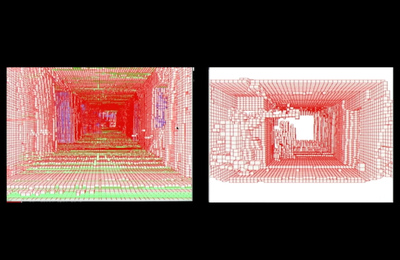
Screenshot from «EYE/Machine II»
by Harun Farocki, 2002 ◆ https://archive.org/details/
digital-images-2/EyeMachineII_HFarocki_C.mp4
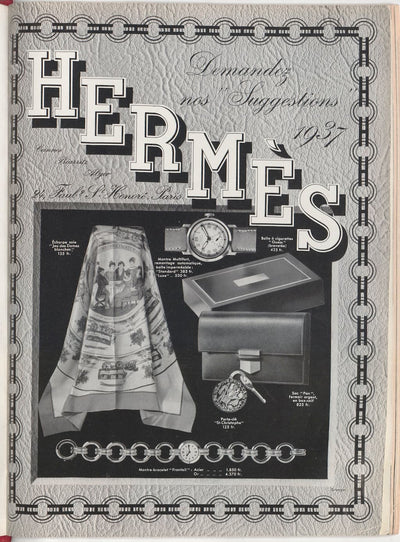
Ad for the first Hermès Scarf
Vogue magazine 1937 ◆ https://
scarfsage.com/blog/2024-03-14_hermes-scarf-ad-vogue-1937
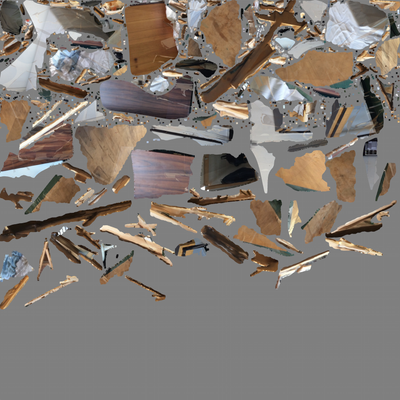
Map of a 3d-SCAN
Taken from a selfmade wooden object in Paris, 2015
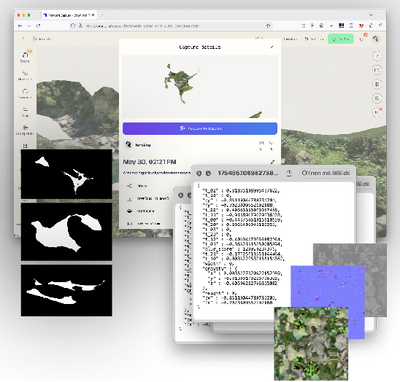
Extracted Data from 3D-Scan
untextured 3d-volumes, json-Files with camera angles, coordinates, depth-maps, maps & images