ASACHILL
A young woman by the pseudonym «asachill» is translated into data, reduced by algorithms to flat, compressed information. Printed onto a scarf, this once-invisible image of how a machine perceives a human being acquires physical presence, emancipating itself from the original.

Wear A Chair
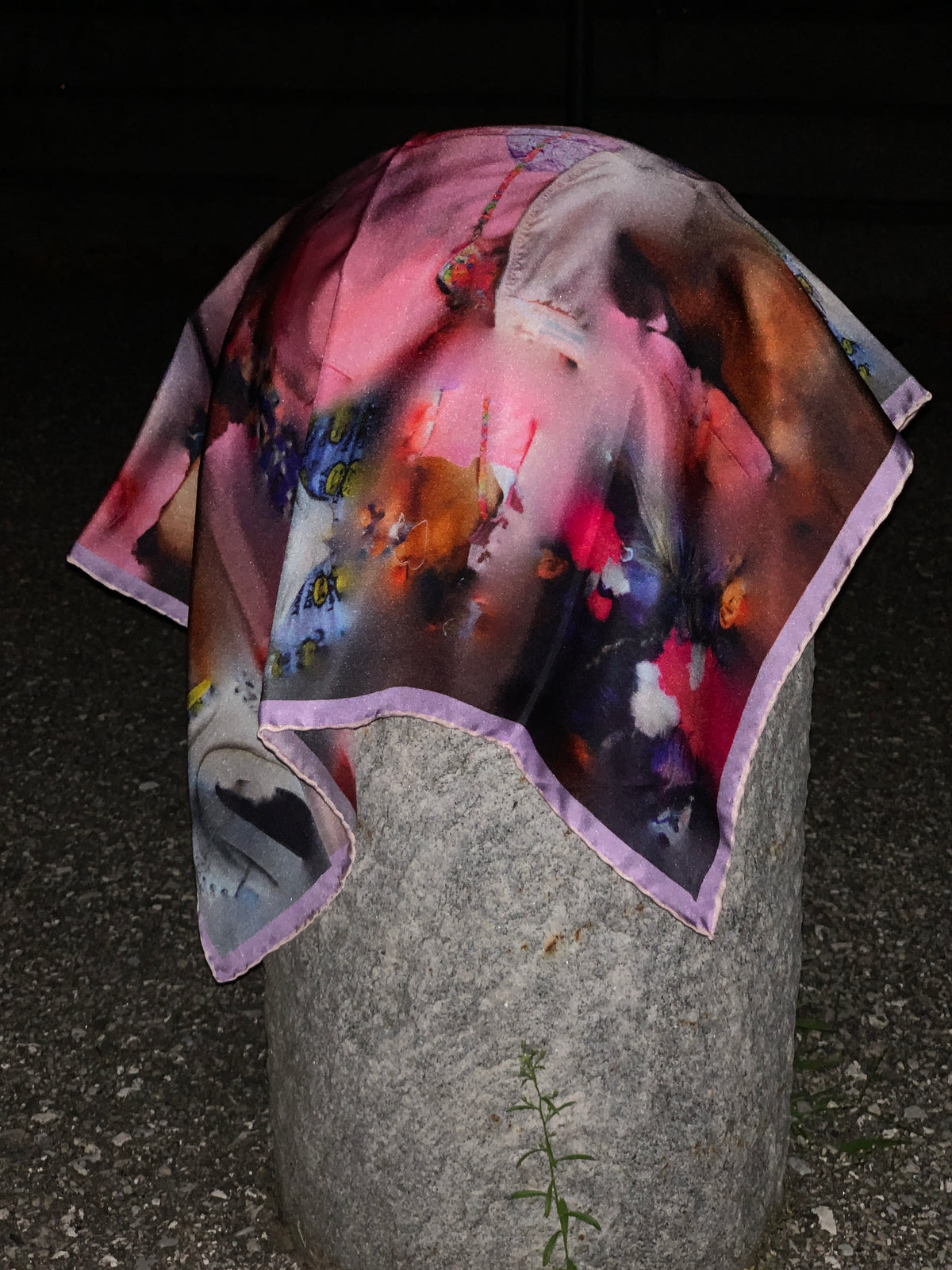
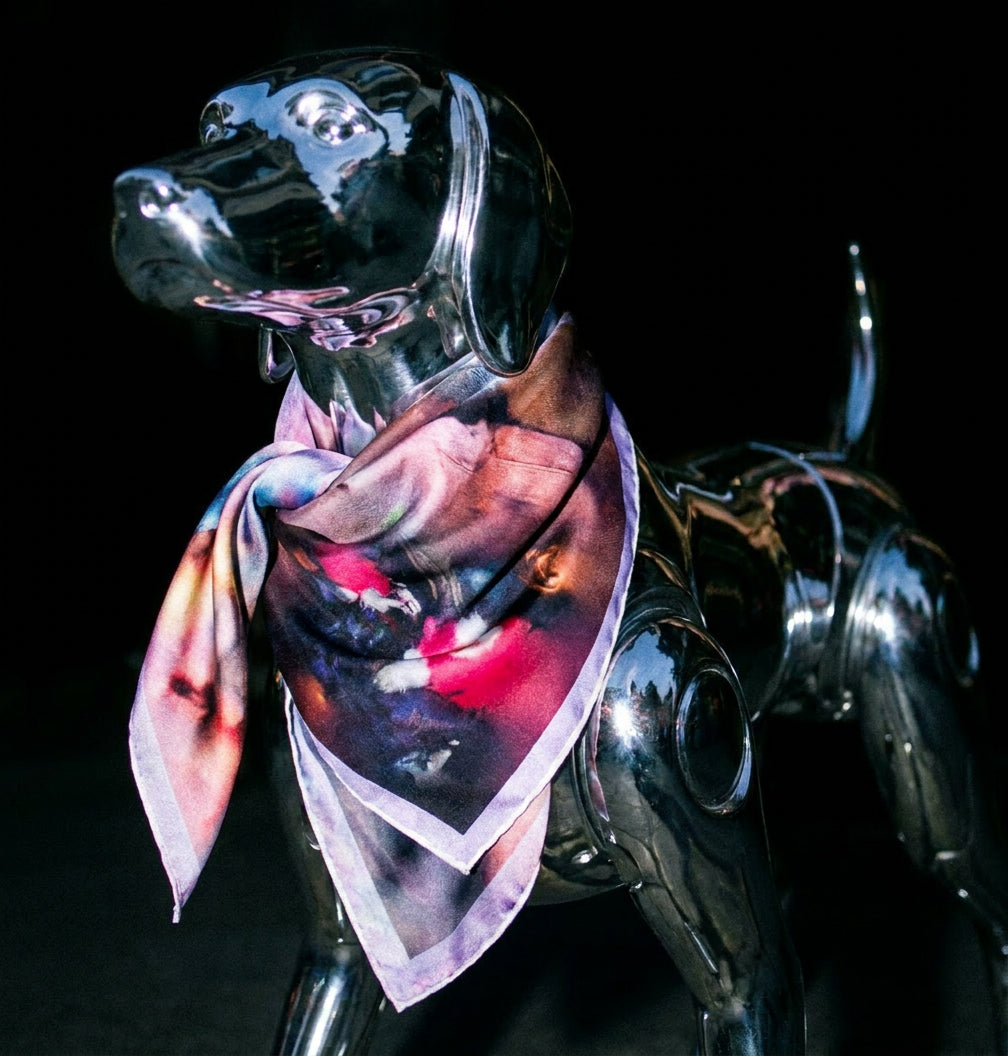
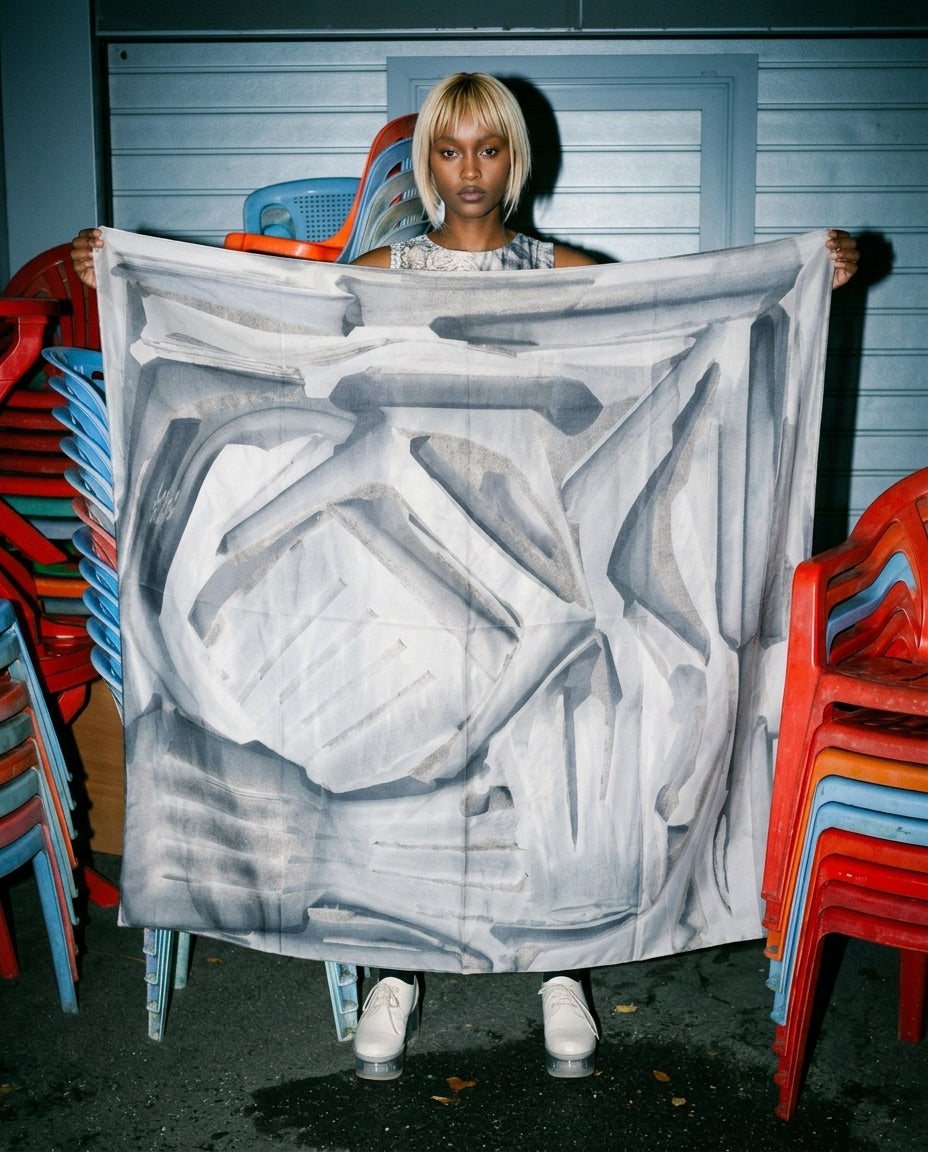
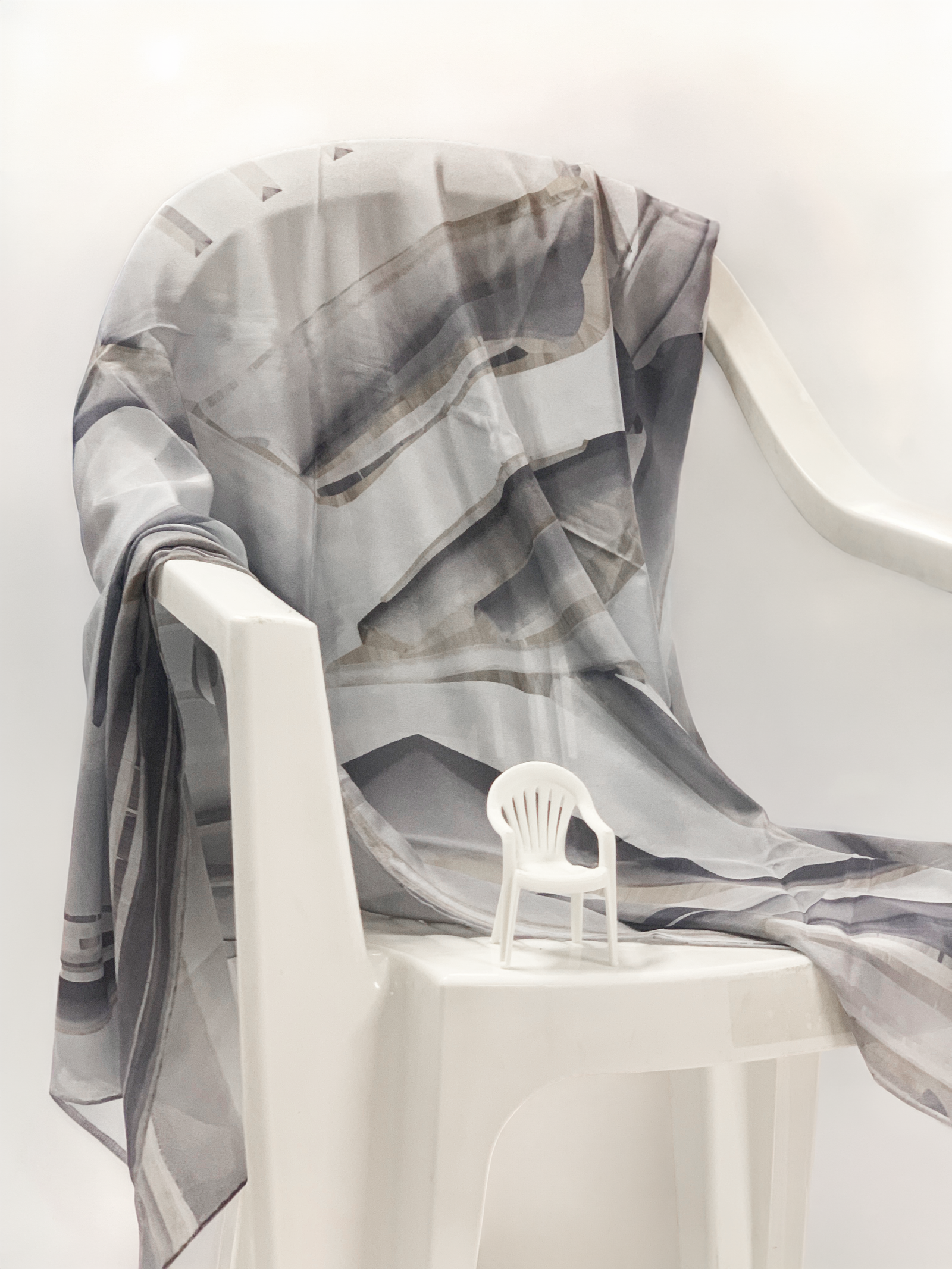
Found on every terrace, every street corner, every improvised gathering from Lagos to Tokyo to Zurich, the plastic chair «Monobloc» is democratic by accident. Produced by the billions, owned by everyone, the chair now becomes even wearable and sets out to spread its connecting potential on silk.


Body Data
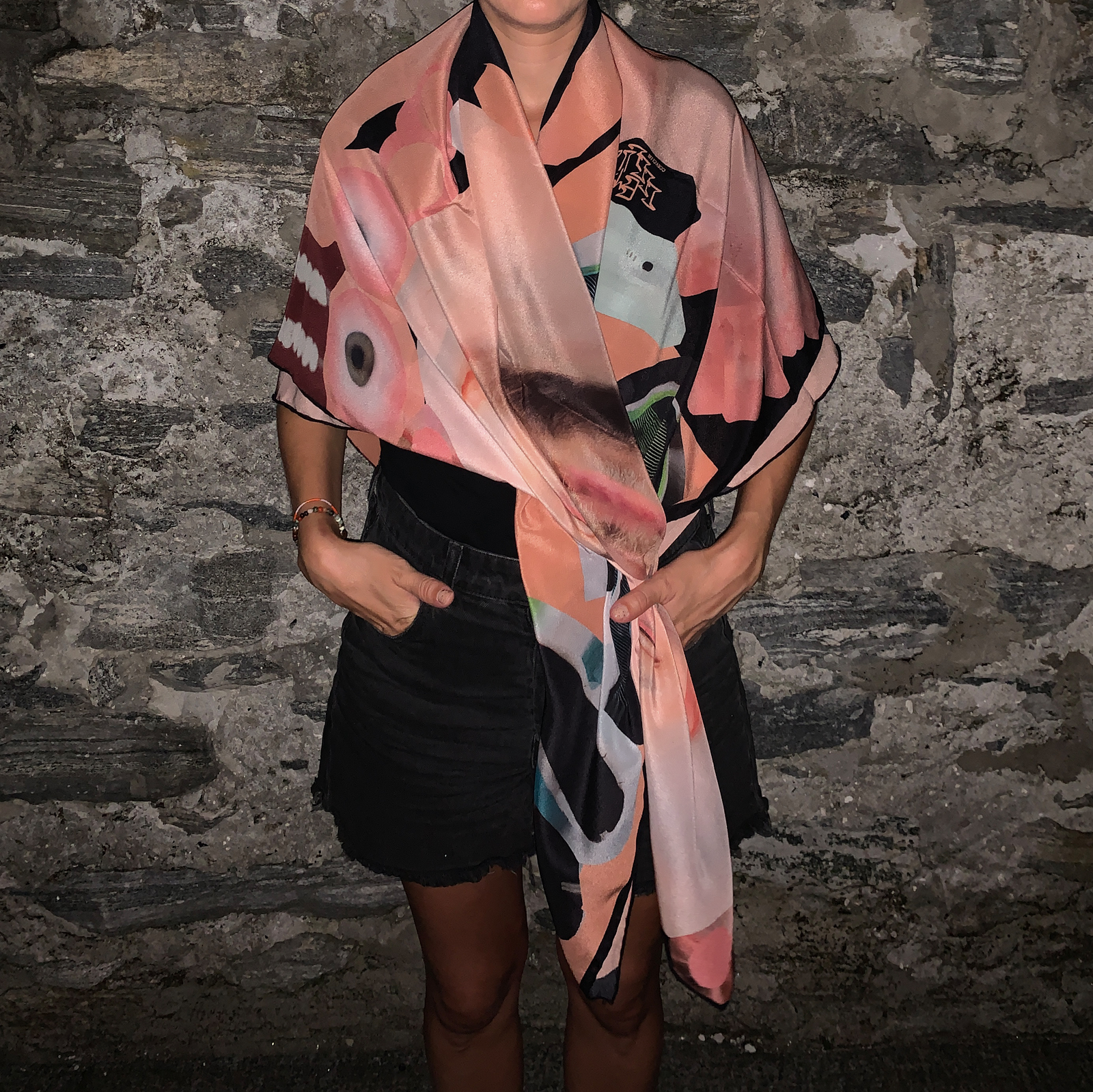
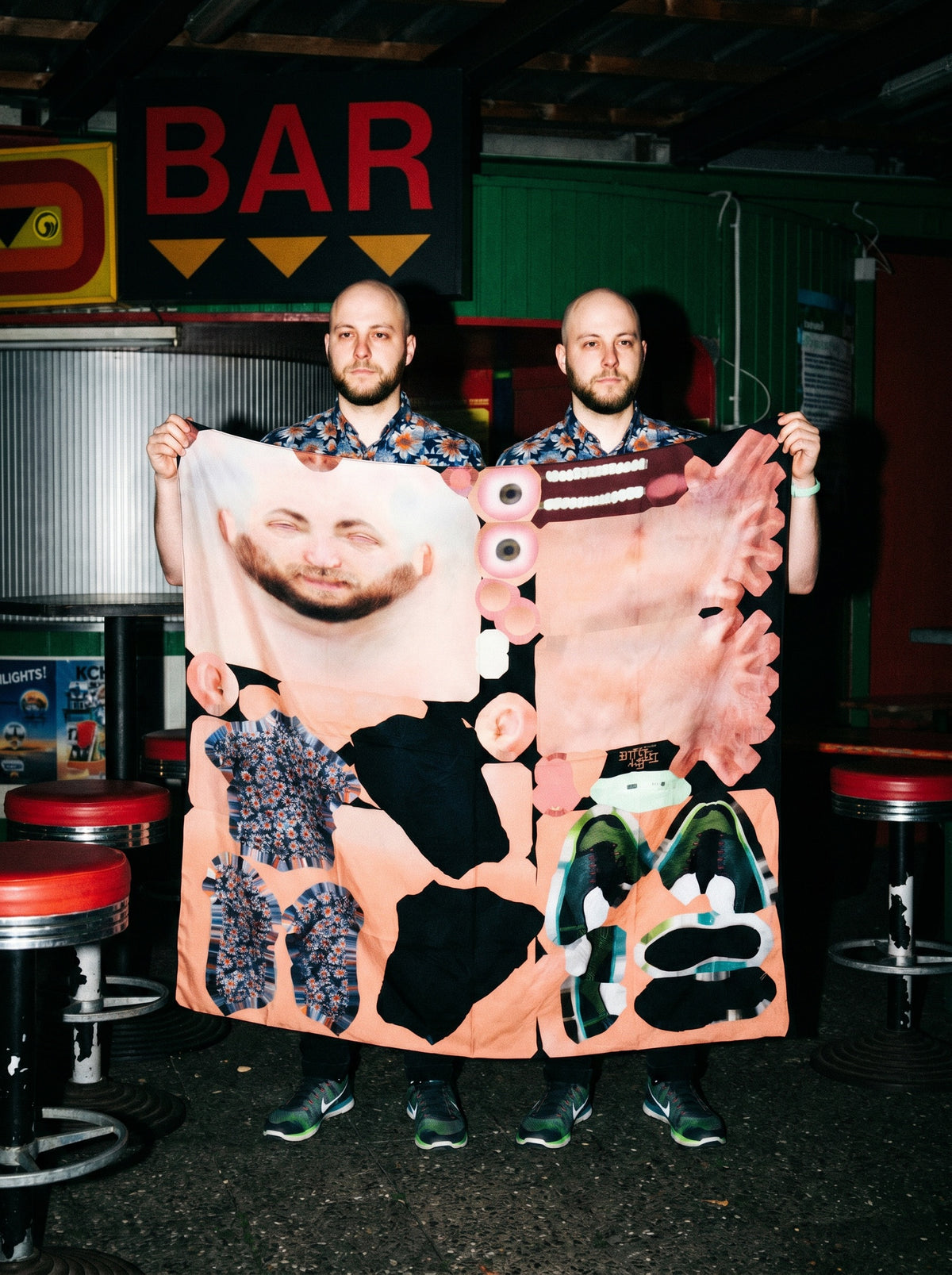
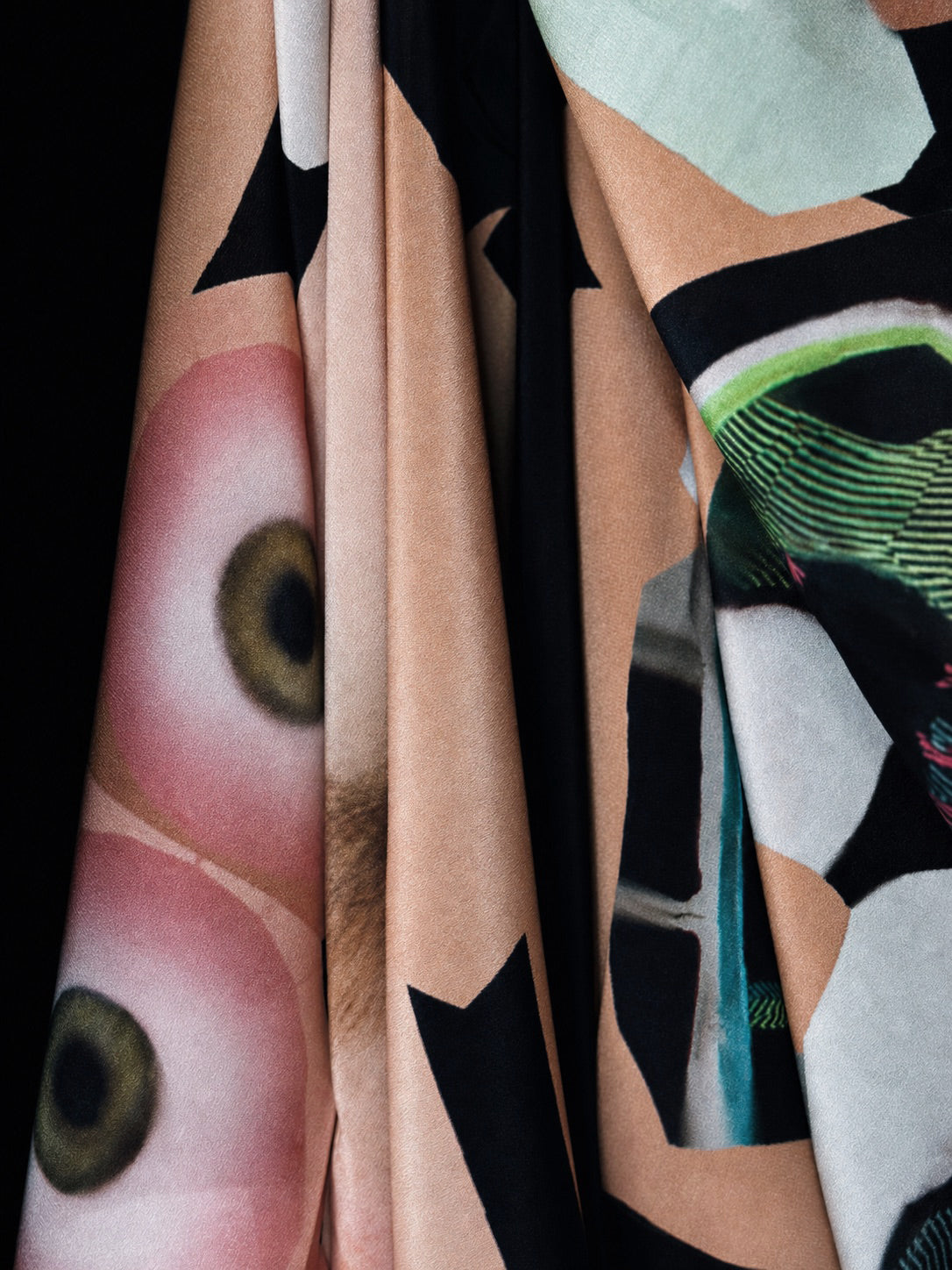
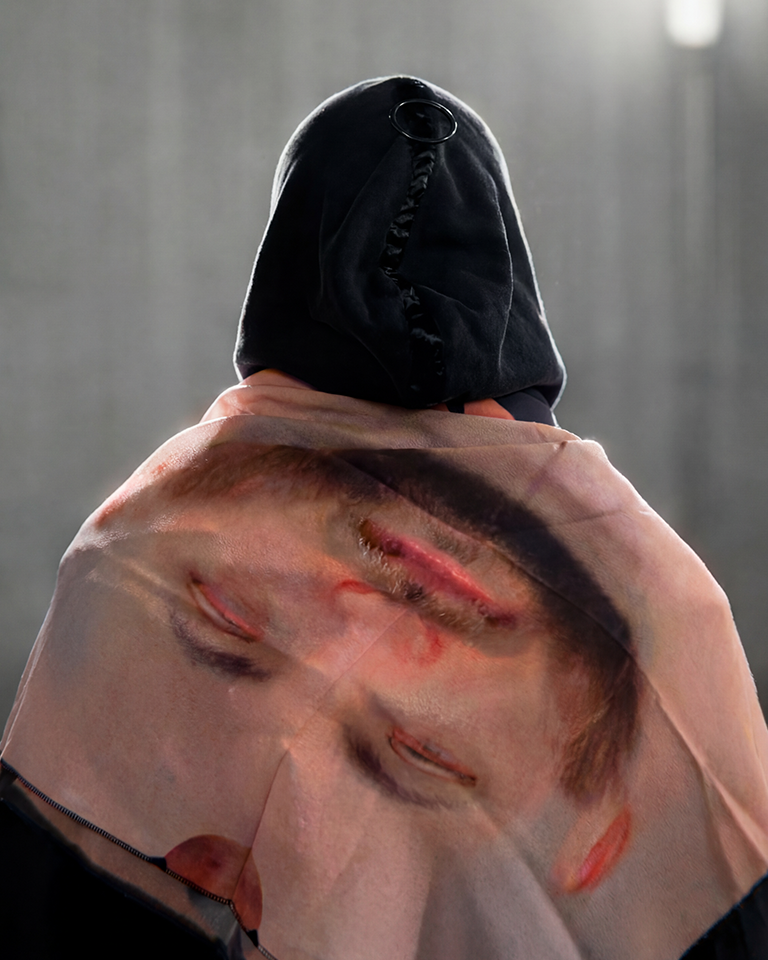
Eric Neumann is a real person. His body was scanned in a professional studio and uploaded to Sketchfab under Creative Commons (CC BY 4.0). Free to use, free to share. What does it mean to licence one's own body? The scarf carries Eric's surface: not his identity, but the algorithmic map of his skin. The most intimate becomes a public good.



Four Horsemen of the Apocalypse [1/4]
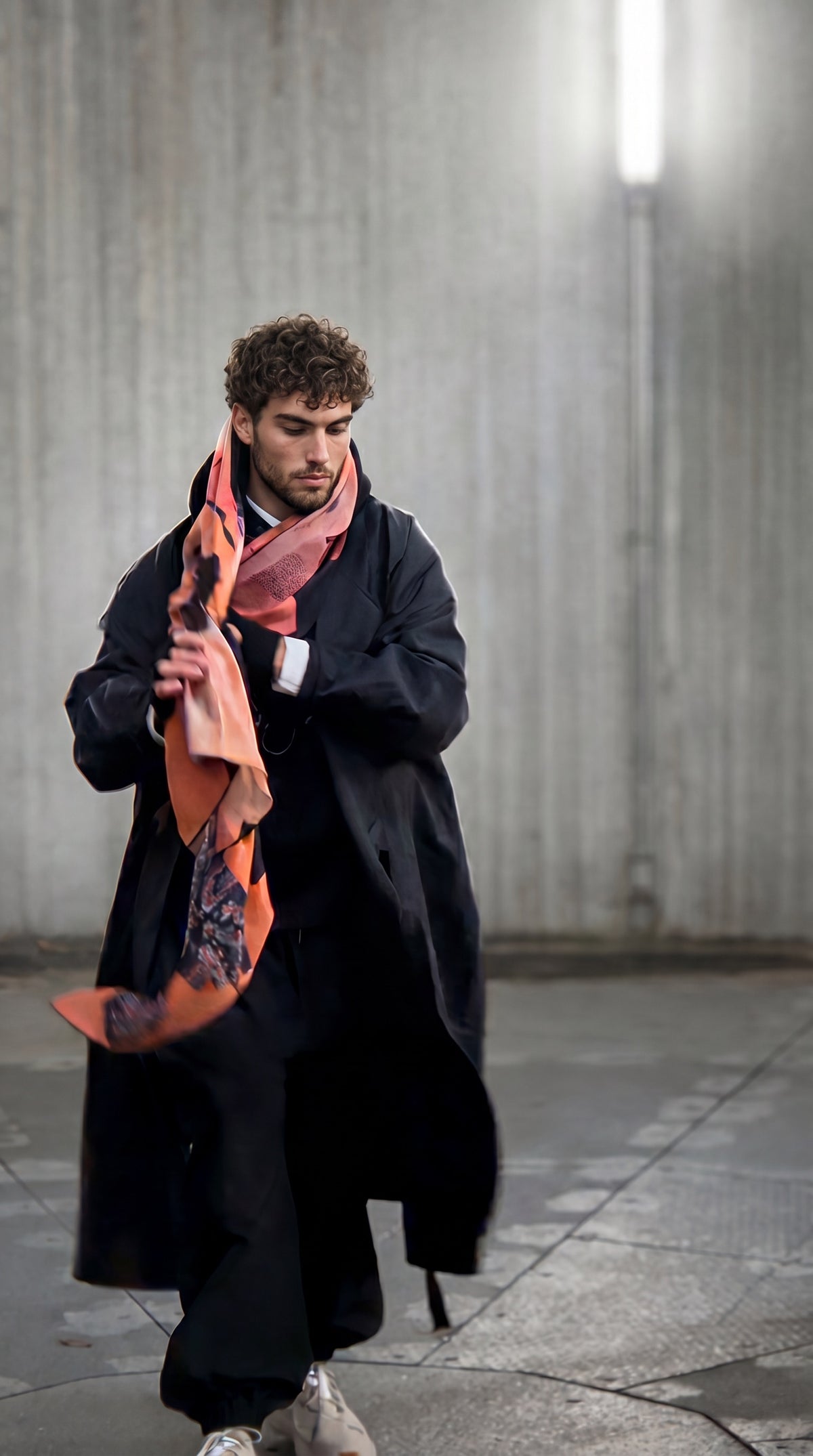
Somewhere between Dürer and a game asset, between the Book of Revelation and the render engine: The Four Horsemen of the apocalypse revisited. Surveillance, misinformation, automated inequality, environmental collapse measured in real time by satellites. Contemporary interpretations of the oldest symbols of catastrophe waiting to be worn on silk.


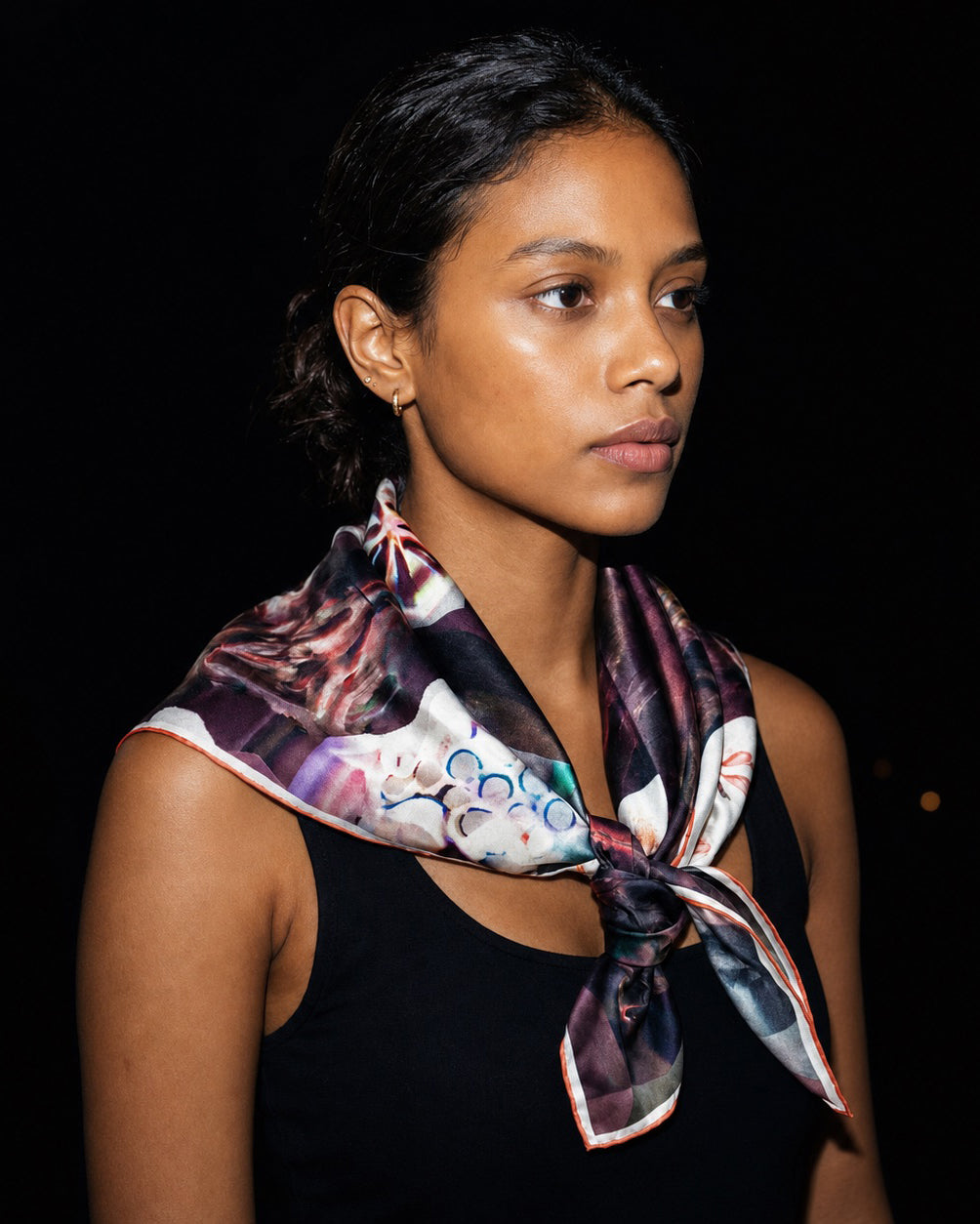

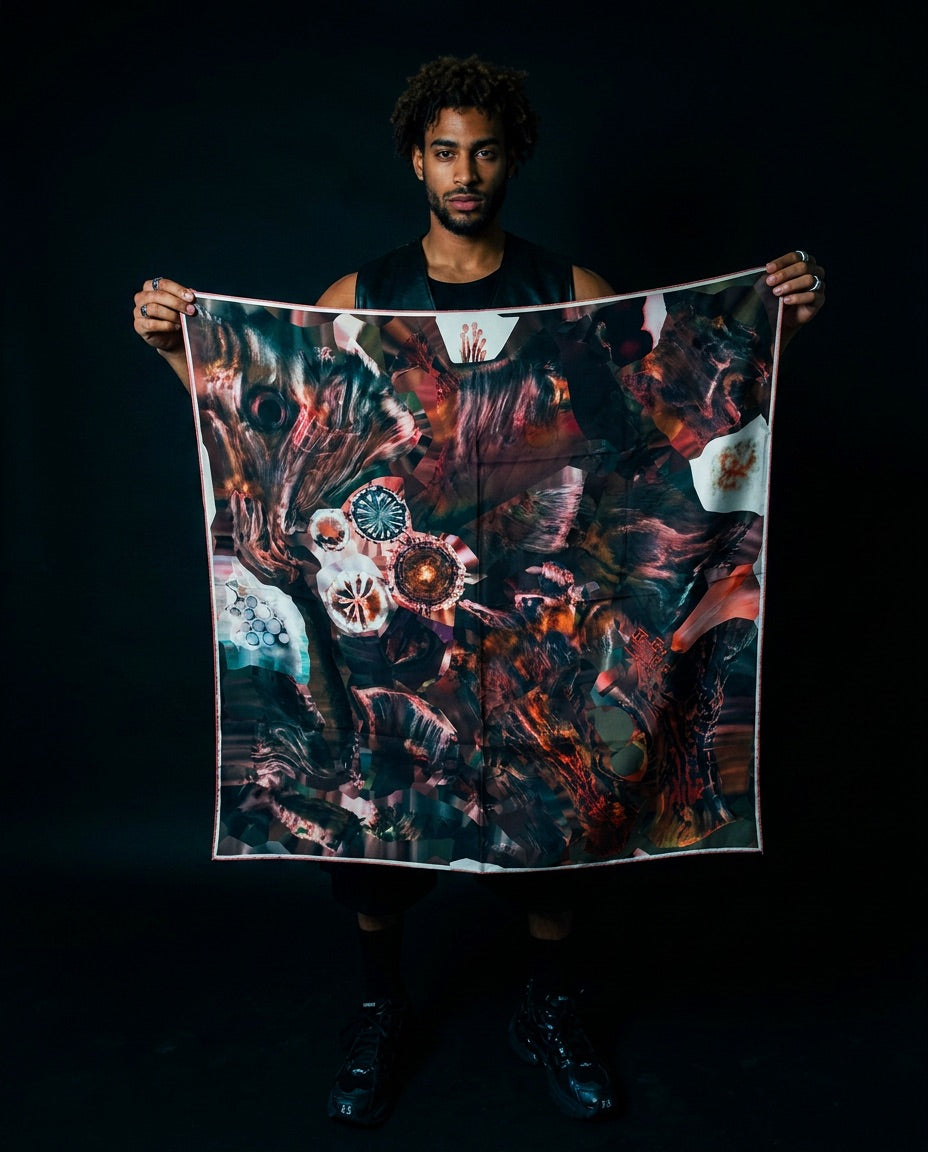
Terrain-04
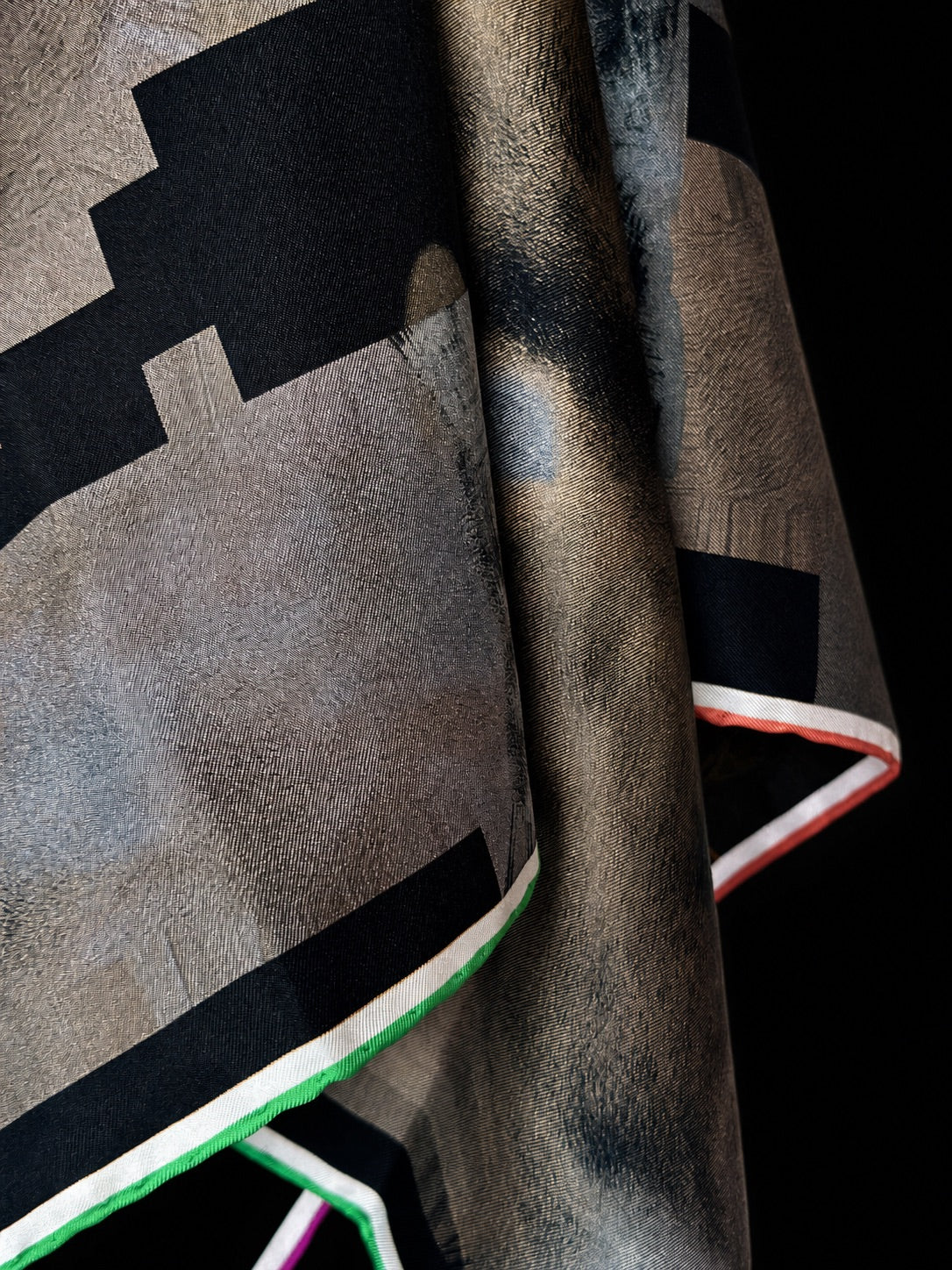
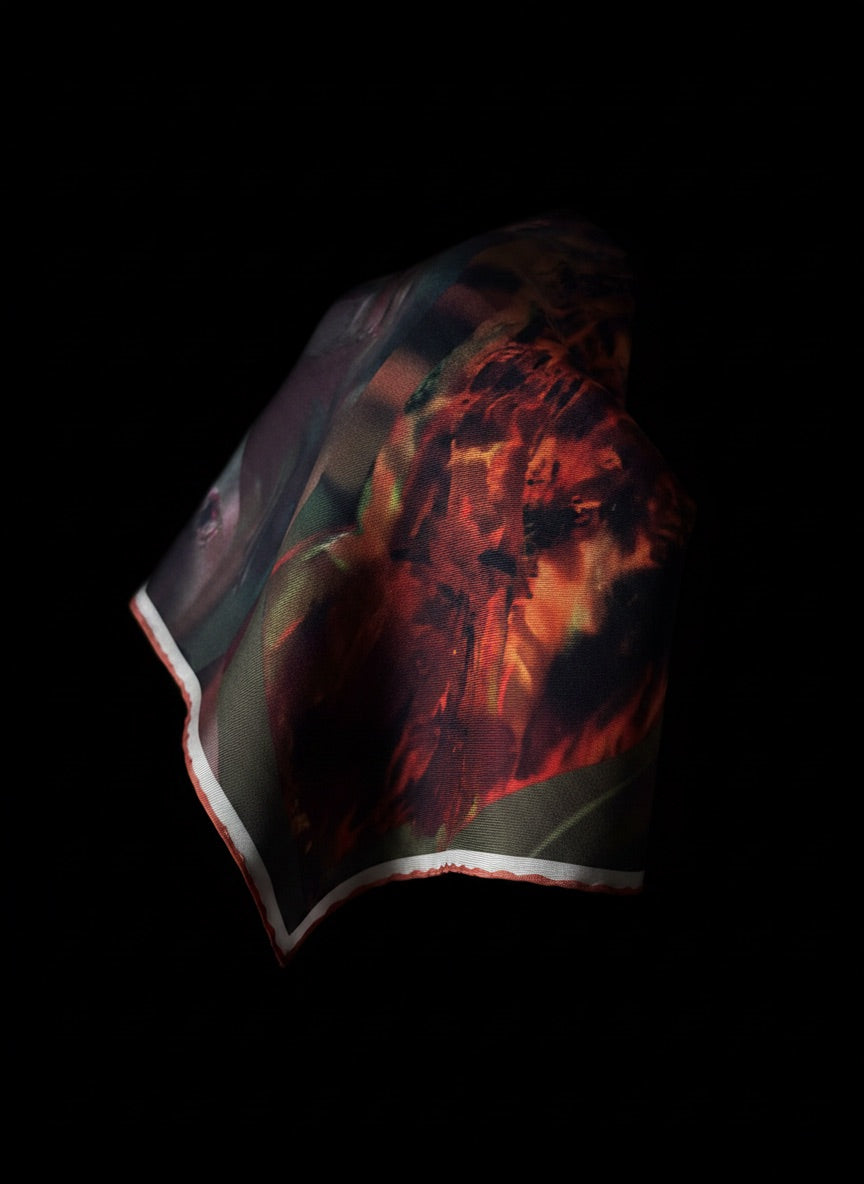
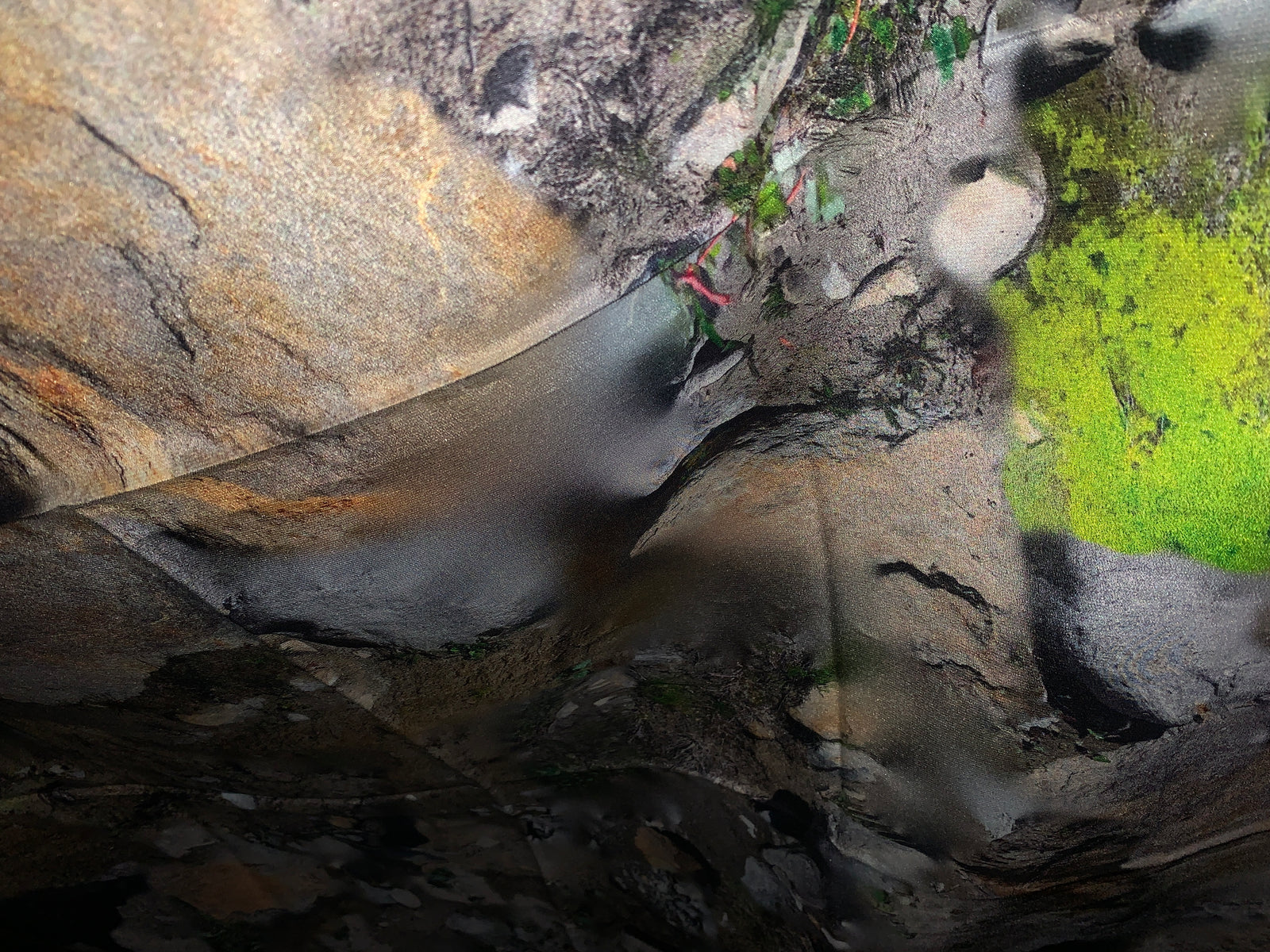
How does an algorithm perceive nature? Cartographic documents of a digitized world not only depict surfaces but also reveal the underlying power dynamics behind the total surveillance of our lived world. They document the moment when nature, private spaces, bodies, and intimacy are subjected to algorithmic measurement. This fragmented, technical language is an expression of a new visual reality that remains largely invisible.
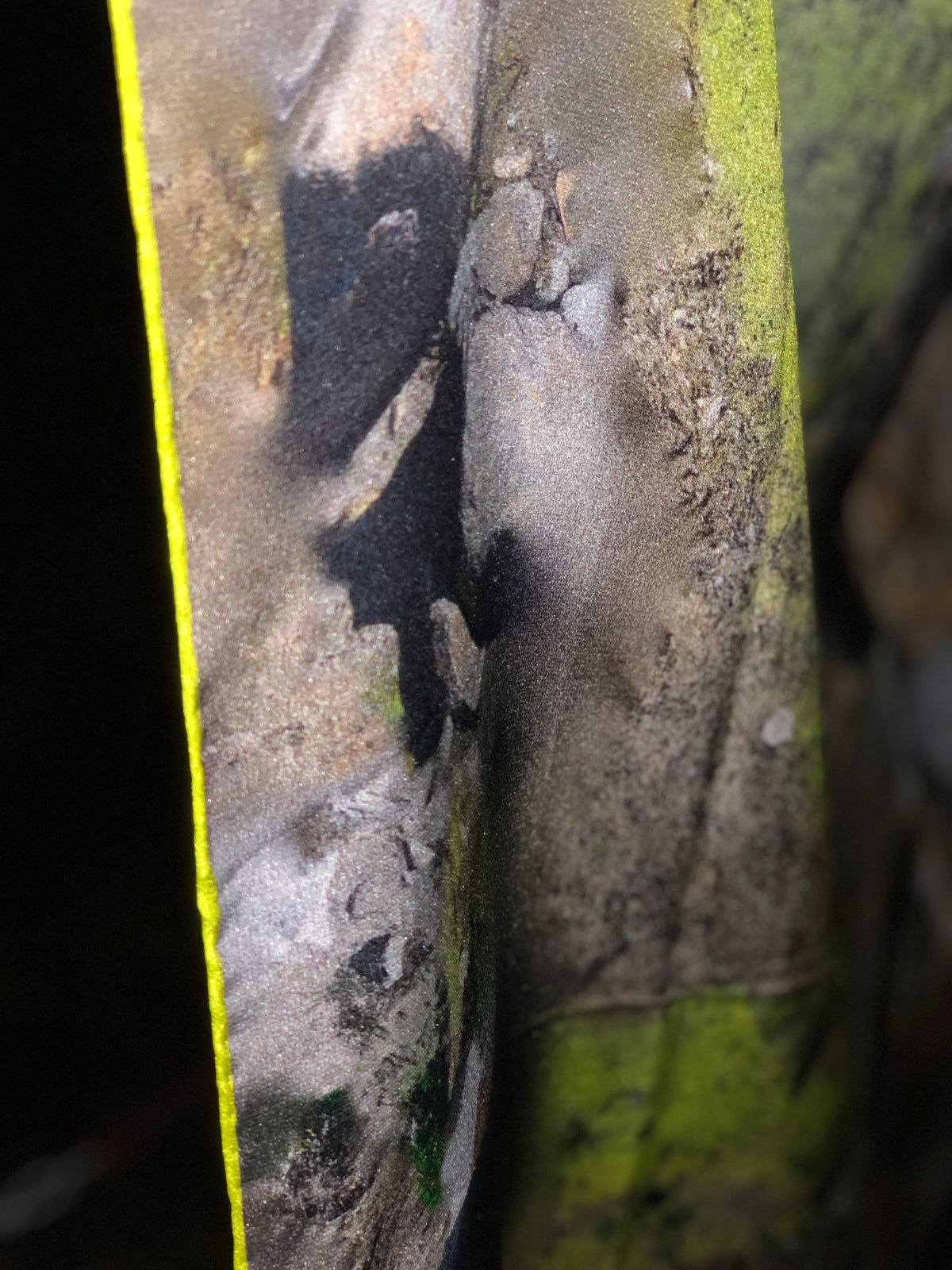
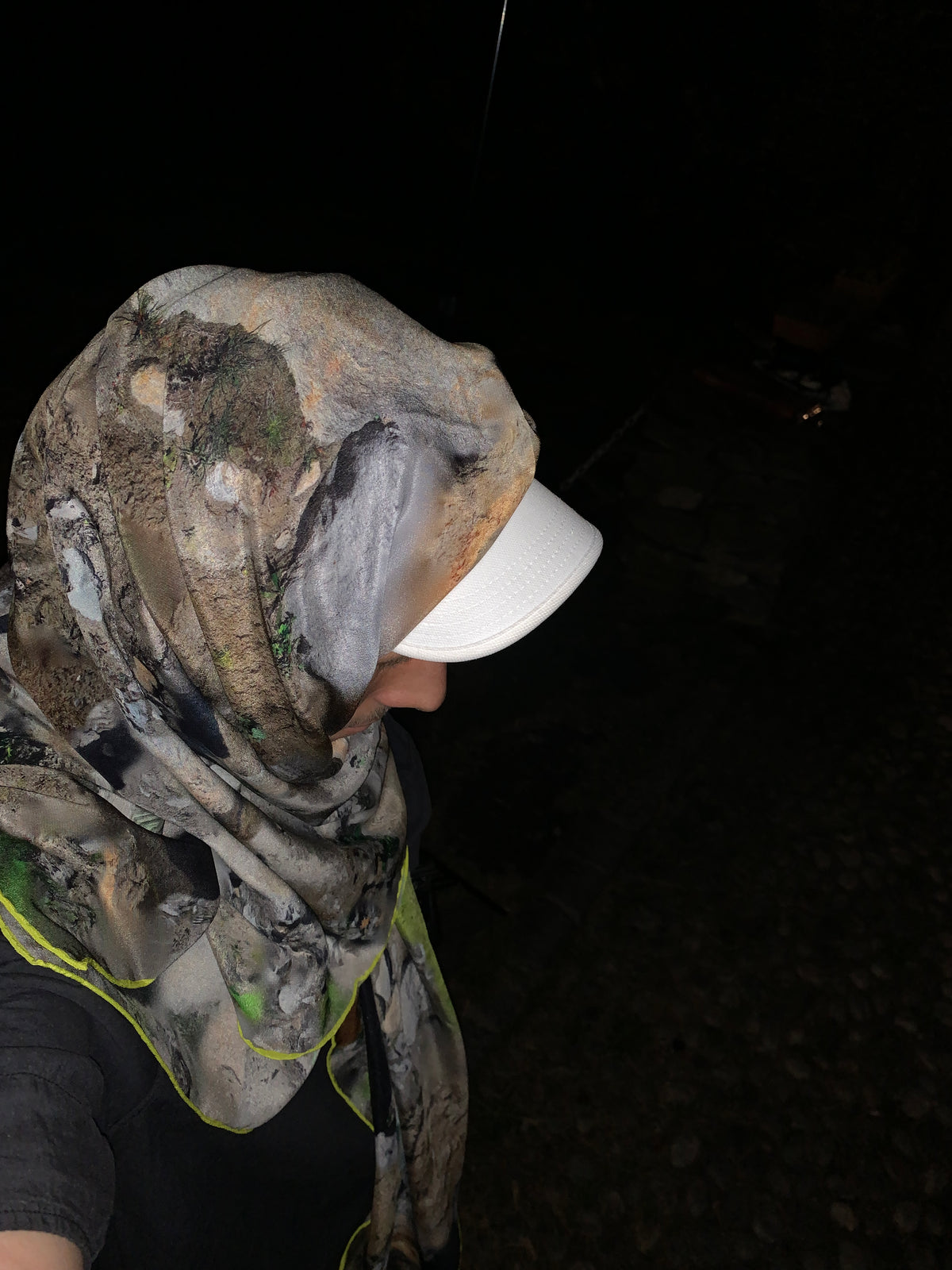


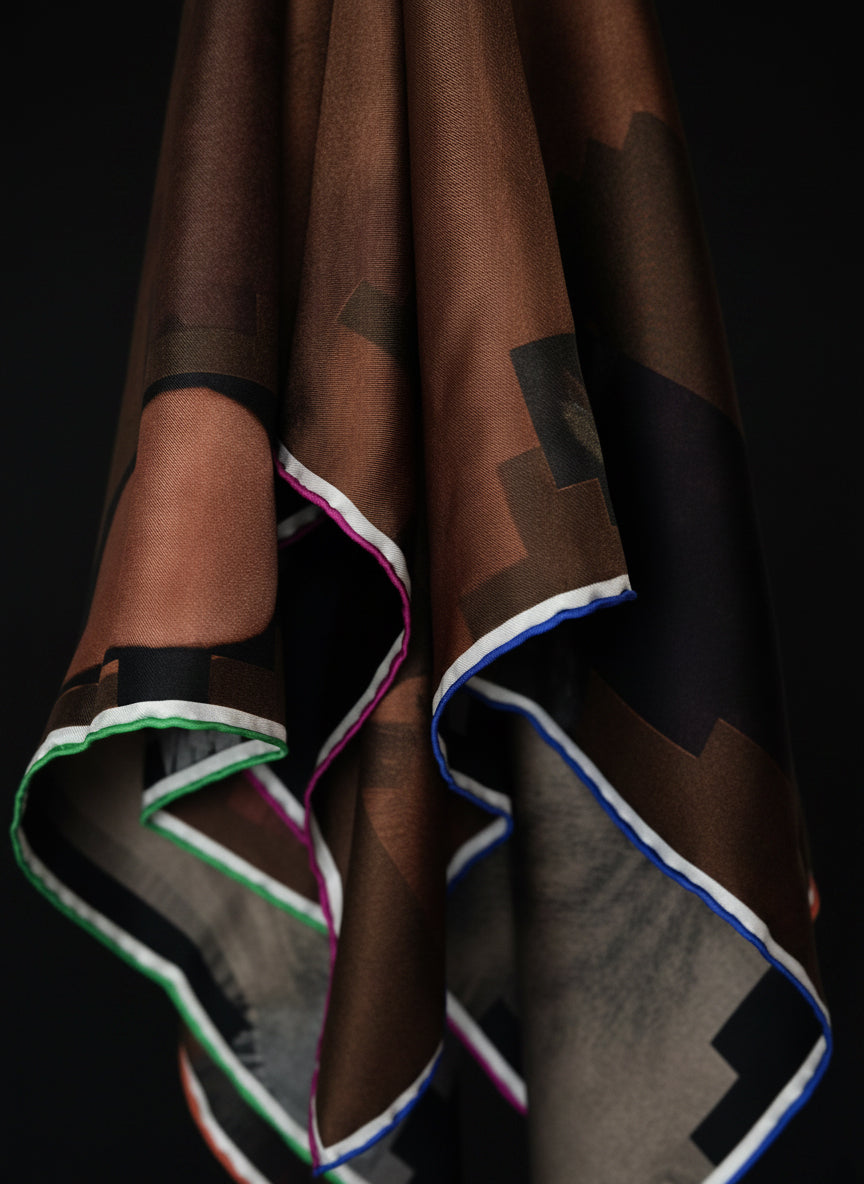
Horse Power
Hermès has the horse. Gucci has the horse. The horse has been on silk forever. My take on it: Same subject, completely different logic. A roughness map and an albedo-map pulled from the inside of a 3D model of a running horse, calculated, not drawn not designed in the traditional sense. Made from images that were never meant for human eyes. Worked into a high quality double-sided silk scarf in the traditional format of 90x90cm, it references the original first Carré by Hèrmes from 1937. Hand-rolled hems in four different colors add contemporary styling options to this subversive hommage to a classic.